
Aerial Sling vs Aerial Hammock vs Aerial Yoga vs Silks vs Fabric: What’s the Difference?
One piece of fabric… and for a beginner, so much confusion. At least it was for me.
My introduction to aerial arts was through the Yoga Trapeze—a parachute-like material with four handles that was created for yoga moves and fitness. Then I saw Cirque du Soleil (and other aerial stage performances) and noticed two long pieces of fabric that didn’t have a loop at the bottom. I assumed that was the only way to do the beautiful, dance-like moves I was watching.
I was told it was called Split Silks. Later I was very rudely told that no one calls it that anymore and it’s now just Silks. Until I went to teach at a different circus studio and I was once again scolded and told it’s called Fabric.
If I’m honest, even working in the industry, this whole name game is confusing. So if you’re trying to figure out what each one is and can’t seem to understand, don’t worry—you’re not alone.
Let’s break it down. I’m going to use every name I’ve encountered, and I’ll keep it beginner-friendly.
Quick answer (if you just want the basics)
Silks / Fabric = two long tails of fabric you climb (classic performance style).
Sling = fabric tied into one loop (often used for aerial dance and can spin).
Hammock = fabric hung from two points (more stable; common for aerial yoga).
Aerial Yoga = a style of practice that usually uses a hammock/sling to support yoga shapes and inversions.
Aerial Fitness = strength + conditioning using the fabric (often hammock or yoga trapeze).
Silks / Fabric (aka Split Silks / Silks / Fabric)
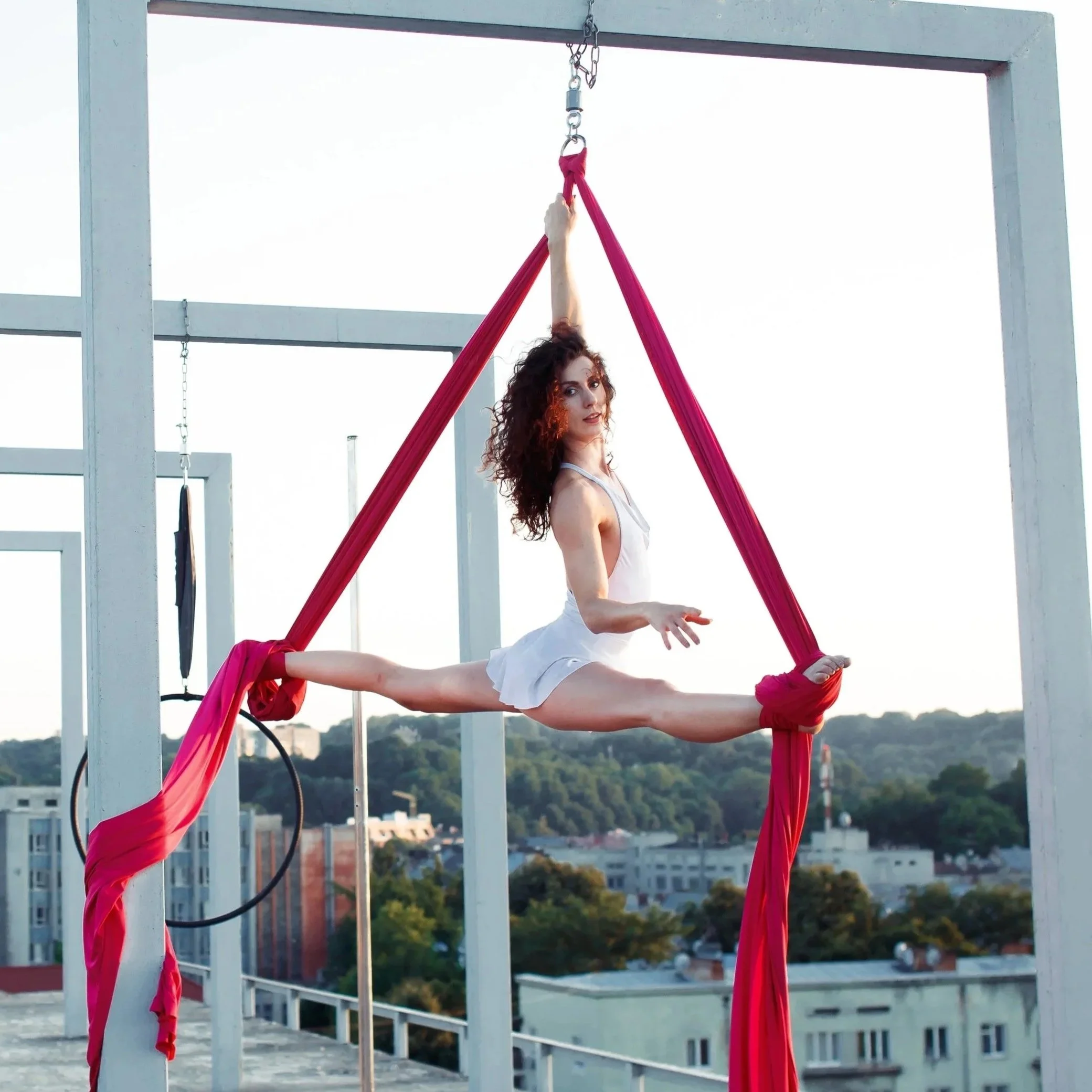
As you can see in the picture, this setup creates two separate long pieces of fabric(often called “tails”). Typically, the fabric is rigged so the middle is secured overhead, which gives you two lengths to climb.
What it’s used for:
Climbing (usually with foot locks + upper body technique)
Wraps, drops, and big dynamic skills
Performance-style sequences (what you often see on stage)
Why the name changes:
Different studios, regions, and lineages use different terms. “Silks” is common in the U.S. “Fabric” is common in other places and in some circus training environments. “Split silks” is older language some people still use.
Sling (aka Aerial Sling)
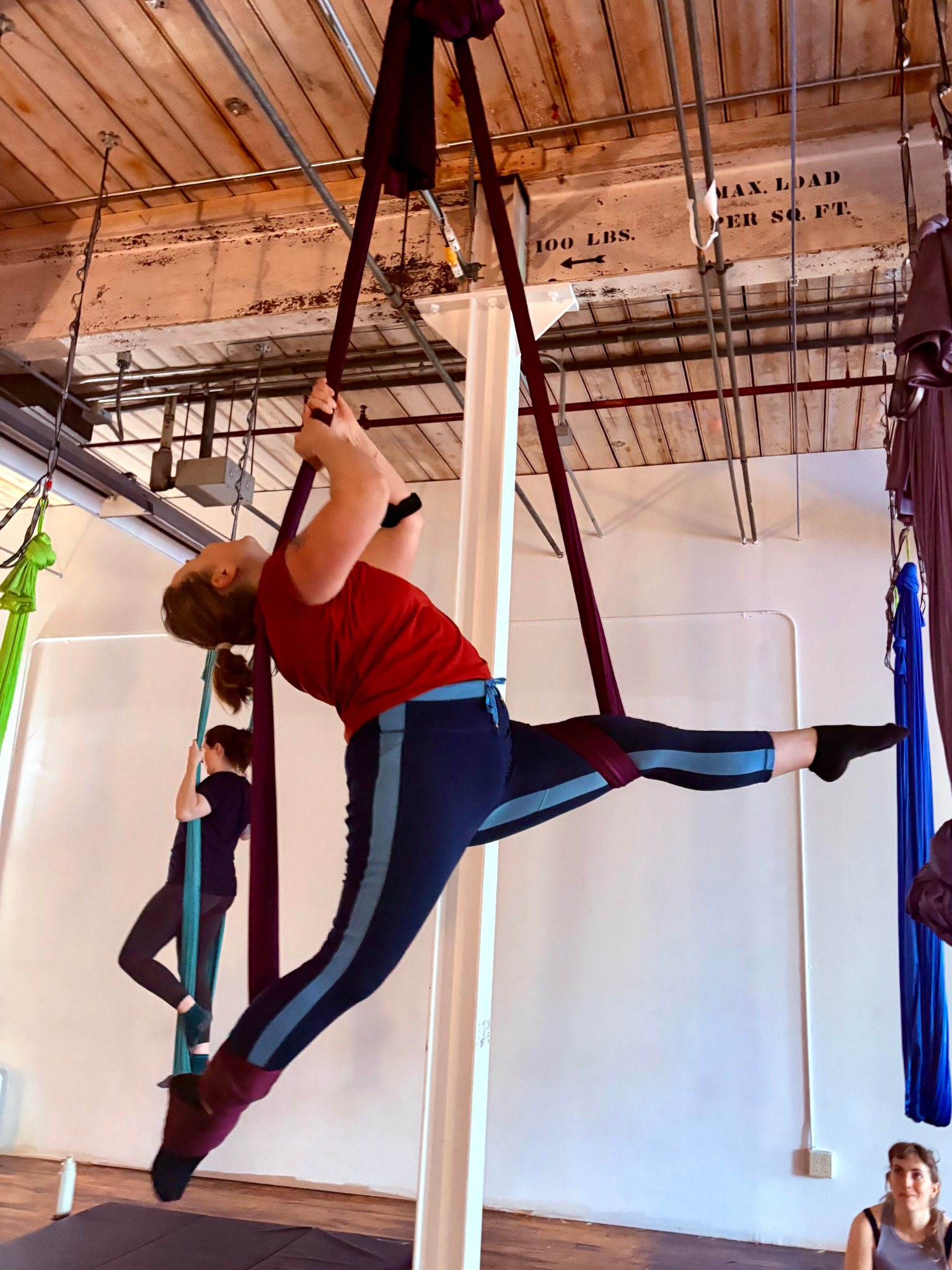
A sling uses the same type of fabric, but it’s rigged so it becomes one continuous loop. You can do this by tying the ends separately and connecting them to a single point with carabiners, or by using hardware like a figure 8 (rigging methods vary by studio and rigger).
When the ends come together at one point, you get a loop at the bottom—this is the “sling.”
What it’s used for:
Inversions, climbs, shapes, and sequencing (including many skills that overlap with silks)
Aerial dance movement
Often used with a spinner (so it can rotate)
Is it “easier” than silks?
People sometimes assume sling is easier because the loop can feel like a built-in safety feature. I don’t see the loop as “easy”—I see it as a dance partner. It gives you different options for support, leverage, and flow… which is exactly why it’s my favorite.
Aerial Hammock (aka Hammock)
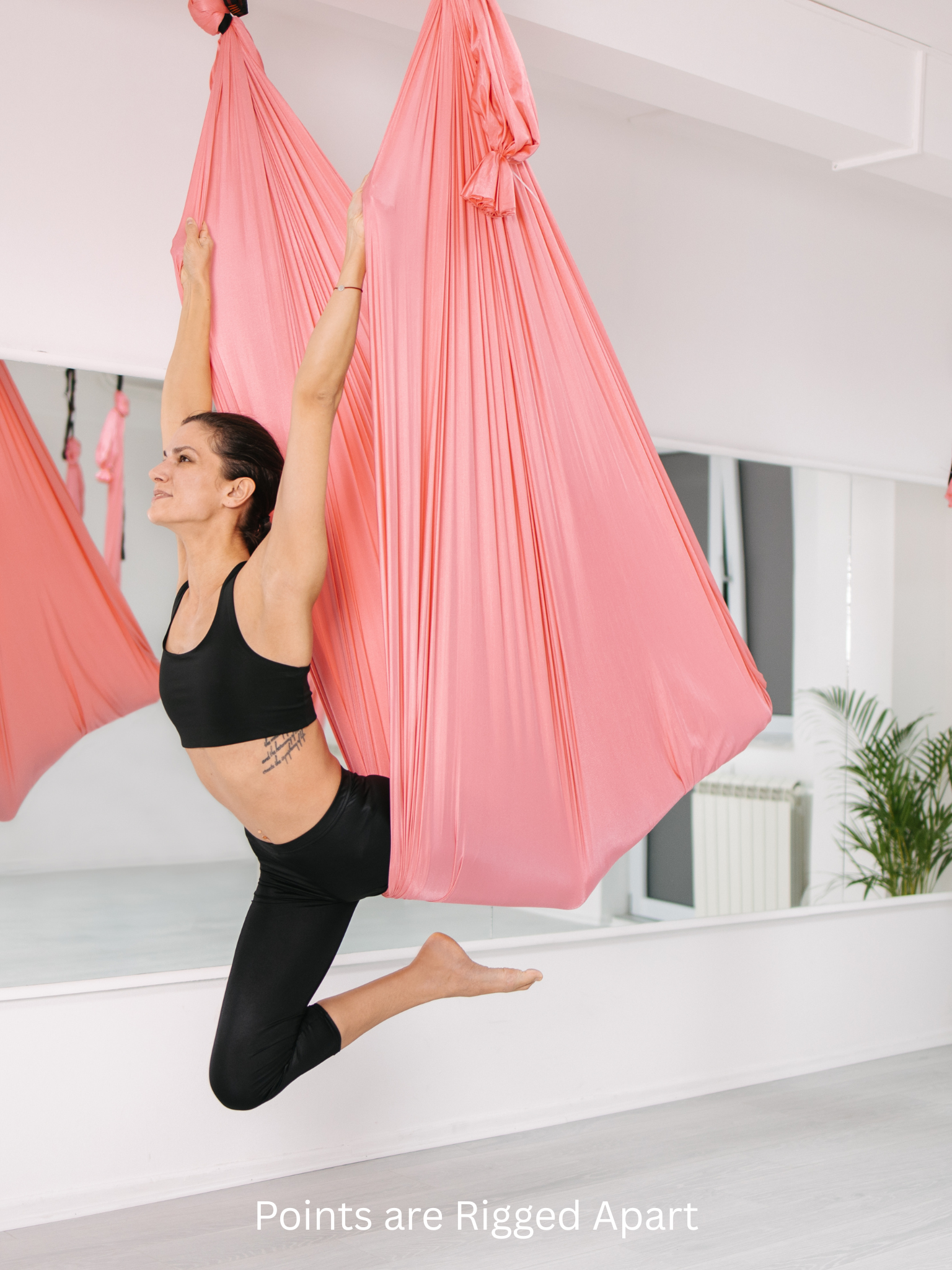
A hammock is similar fabric, but instead of bringing the two ends together at one point, the fabric is hung from two separate points—often about 3–4 feet apart (this varies based on body size, rig height, and what you’re doing).
Because it’s hung from two points, the hammock tends to feel:
More stable
Less spinny
More “platform-like” for yoga shapes and supported movement
What it’s used for:
Aerial yoga
Restorative aerial
Conditioning and beginner foundations
Many sling-style shapes (with a different feel because it doesn’t pull into one tight loop)
Rig height note (important):
In a sling, when the fabric pulls into one point, it can feel tighter and “shorter” depending on how it’s rigged. Hammock can be a better choice for lower-height rigsbecause it stays more open and stable. (Exact height needs vary—always follow safe rigging guidance for your setup.)
Aerial Yoga
Aerial yoga most often uses an aerial hammock, though some studios use a sling-style setup and still call it aerial yoga. (More name game.)
Originally, aerial yoga was a version of traditional yoga that uses fabric to:
Support the body in poses
Make inversions more accessible
Reduce strain for people who don’t love getting down to the floor
Create traction and decompression through the spine (when taught safely)
Aerial yoga can be:
Strong and athletic
Gentle and supportive
Or a mix of both, depending on the teacher and class style
Note: Many studios use the term aerial yoga for classes that include higher, more circus-style skills that don’t resemble traditional yoga postures. (More name confusion.) Before you sign up, ask what the instructor will actually be teaching—because “aerial yoga” can now mean climbs, drops, and other advanced moves. And if you’re going up high, don’t rely on a yoga mat alone; use proper crash mats and appropriate safety setup.
Restorative Aerial (aerial yoga’s calmer cousin)
The hammock can be brought closer to the ground for restorative aerial, where it’s used to help you stretch, lengthen, and breathe—while calming the nervous system. This is one of my favorite entry points for stressed-out bodies that want movement without punishment.
Aerial Fitness
Yes—there’s one more very common use for this fabric: fitness.
Supported pistol squats, progressions to pull-ups, core work that lights you up in a totally different way… the fabric can help you get stronger while still feeling like you’re playing.
If you’ve ever hated “fix your body” fitness culture, aerial fitness can be a refreshing alternative because it’s:
functional strength
mobility-friendly (when taught well)
and honestly… fun
So… what should you start with? (My honest recommendation)
All of these can be strong, beautiful, and performance-worthy—including drops. The real difference is how the fabric is rigged and what that means for your learning curve: two tails (silks/fabric), one loop (sling), or two points (hammock). If you’re new, I’m going to gently steer you toward hammock or sling first, because they’re the most supportive ways to build foundations—strength, alignment, confidence, and control—without feeling like you have to “earn” your place in the air.
Choose Aerial Hammock if you want stability + support while you learn.
Hammock is usually the most beginner-friendly because it’s rigged from two points, so it tends to feel more stable and predictable. It’s incredible for yoga shapes, fitness, restorative work, and it can absolutely be dynamic and circus when you’re ready—just with a steadier feel as you build skills.Choose Aerial Sling if you want flow, dance, and creative shapes—with a strong circus pathway.
Sling is rigged as one continuous loop, which gives you a unique “partner” to work with. It’s amazing for lines, transitions, and expressive aerial dance—and yes, it can get powerfully dynamic too. If you love the feeling of spinning, traveling, and flowing, sling is often the sweet spot.Choose Silks/Fabric if you love the feel of two separate tails and want that specific technique.
Silks/fabric is its own language: climbs, wraps, and skills that depend on managing two tails independently. It’s not “more” or “less” performance than the others—it’s just a different tool, with a different learning curve and a different kind of grip/wrap strategy.If your main goal is stress relief + mobility + a nervous system downshift, start with Restorative Aerial (Hammock).
This is the most supportive entry point for tight hips, stiff backs, and overwhelmed nervous systems—and it still builds real aerial body awareness.
FAQ (because these are the questions everyone asks)
Is aerial sling the same as aerial hammock?
Sometimes people use the words interchangeably, but technically:
Sling = one loop from one point
Hammock = two points, more stable/open
Is aerial yoga the same as hammock?
Aerial yoga is a style of practice. Hammock is an apparatus setup. Most aerial yoga uses hammock, but not all hammock classes are “aerial yoga.”
Why do people call silks “fabric”?
Different training lineages and regions. Same general apparatus, different naming culture.
Want help choosing what to learn first?
Want a clear path (without guessing or getting overwhelmed)?
That’s exactly why I built my program: a step-by-step progression that starts with foundations (activation, alignment, and confidence) and builds you into joyful, capable flight—whether you end up loving hammock, sling, silks, or all three.
A quick safety note (because I care about your body)
Aerial is incredible, but it’s not the place to guess your setup.
If you’re training at home, get qualified rigging guidance for your space.
If you’re in a studio, ask what the class is (sling vs hammock vs silks) and what the prerequisites are.
If you have injuries, vertigo, uncontrolled blood pressure, glaucoma, or you’re pregnant/postpartum, ask your healthcare provider and work with an experienced instructor who can modify appropriately.